


I’VE BEEN COOKING THE BRISKET low and slow all day and thinking about how much I’m enjoying the quiet. Yet I feel energized, excited about the party tonight. The house is filled with that wonderful savory sweet smell. In a couple hours, I’ll pick the kids up from elementary school, and after I pull into the garage, they’ll open the car door and smell it, too. That wonderful smell will waft down from the kitchen and seep inside their little bodies signaling what’s to come later: crispy fried potato latkes, homemade applesauce, jelly donuts, chocolate gelt, dreidel games, and, of course, their friends from both regular school and Sunday School. Thankfully, the first night of Chanukah is on a Friday night this year so they can sleep in tomorrow.
They’ll throw down their backpacks, run upstairs to the kitchen, and sit at the counter waiting for me to follow them upstairs. They needn’t beg for a taste because I always give in. I grab two small plates from the cabinet, then open the oven and cut a couple slices straight from the roasting pot, making sure to scoop up some of the sauce with a ladle along with the now soft and sauce-soaked carrots, my daughter’s favorite. Did you make enough for leftovers, my son will ask and every year it is the same, Of course, honey, don’t worry, we’ll be able to have brisket sandwiches all week. With the butcher it is the same, too. He tells me each year, you are buying too much, you should count on half a pound per person, and my reply is the same— always—brisket shrinks more than other meat, I know this for a fact and anyway, my kids eat leftovers all week.
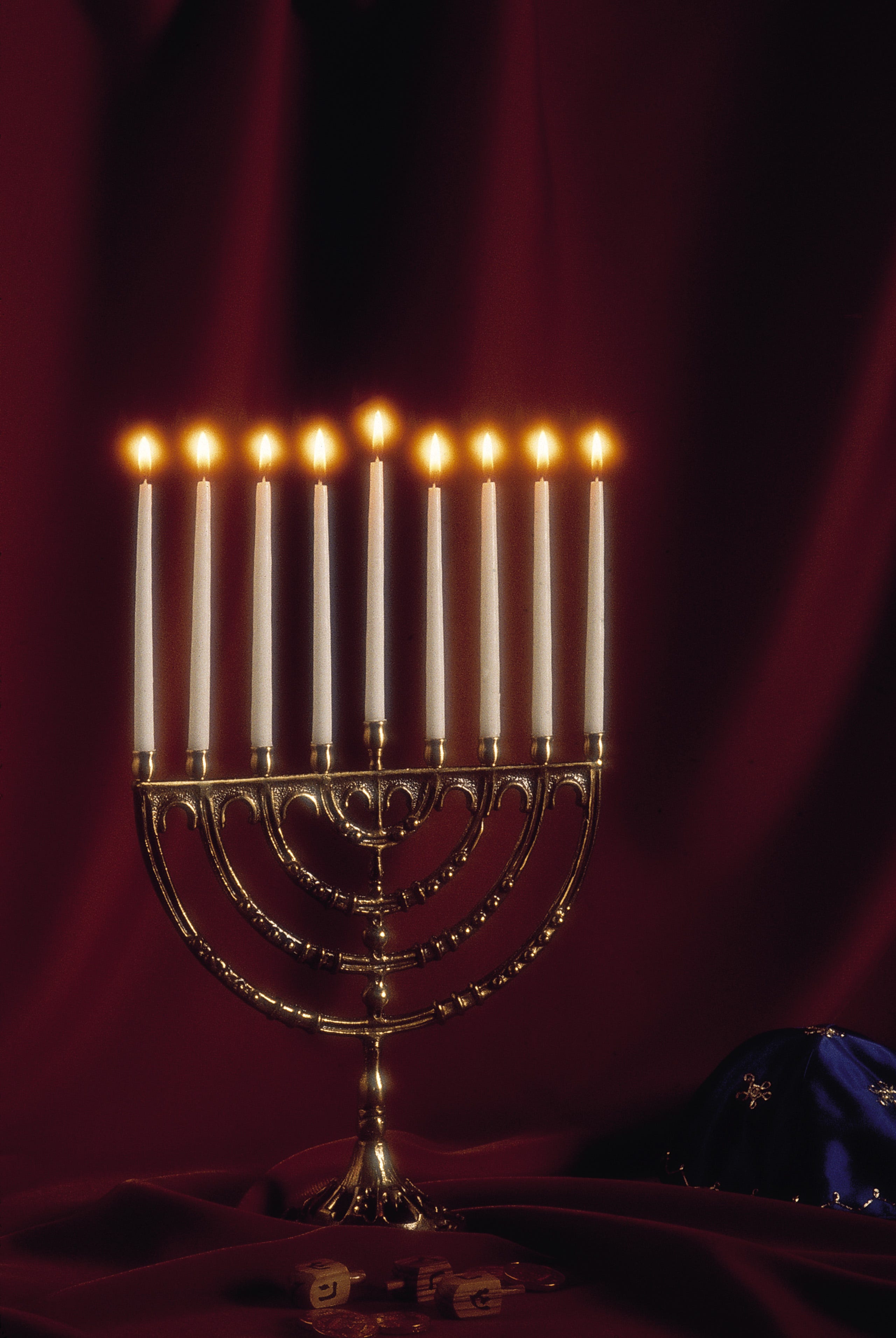
Earlier in the day, I grabbed the plastic bin labeled “Chanukah” from the storage cabinet and took out a bunch of small dreidels and a few of the larger ones, a box of colored Chanukah candles, and a package of small square dreidel printed napkins we didn’t use last year. From the same cabinet, I took out the menorah my daughter made at summer camp over the fancier store-bought menorahs intertwined together still in the bin. On a small strip of wood, my daughter glued nine small candle inserts and painted the base blue and red (and brown in spots where the paint colors mushed together and combined). This one is my favorite. I set everything on the kitchen counter along with the chocolate gelt and challah that I picked up from the market that morning. I pulled out the platters, plates, silverware, cups, and wine glasses yesterday and stacked them neatly on the dining room table so there’s less for me to do later today. The menorah I’ll keep in the kitchen by the stove all evening to avoid the unfortunate mishap of any of the kids knocking it over while the candles are lit.
After their brisket snack, the kids will choose where they want the dreidels and gelt to live for the evening. Usually, it’s a small corner table in the living room because there’s enough space on the floor for their friends to sit around. I’ll let the kids watch TV so they can have some quiet time before they have to change out of their school clothes. This also keeps them occupied for a bit so I can finish preparing the food. I’ll set out the applesauce and sour cream for the latkes, slice the brisket, and make a couple crudités platters. I’ll finish making the salad, tossing it with the dressing minutes before everyone is due to arrive. Soon, their father will come home with jelly donuts, and he’ll start frying up the latkes. Latkes are the one thing I don’t like to make during Chanukah because the entire process from grating the potatoes to frying the pancakes is messy and greasy but fortunately, he enjoys it, so it works out well.
And every year it is the same. The brisket, the kids eating a couple of pre-slices cut directly from the oven, the same conversation with the butcher, the Chanukah box pulled down from storage, the handmade menorah, the gelt, their father coming home with jelly donuts and frying the latkes and so on. For over twenty years. Some years, we invite over new friends or friends of friends or new neighbors. Whoever shows up, I look forward to feeding them all.
Twenty years becomes a ritual. Twenty years becomes tradition. Twenty years becomes little kids filling themselves up with gelt and donuts before guests even arrive, then middle school kids being able to light the candles by themselves without any help, then high schoolers who make the salad and want their turn at frying up the latkes, and then, all of a sudden, it’s college kids who’ve grown beyond me and who not only teach the younger kids how to play dreidel but teach me all sorts of things about life.
One of my favorite parts of celebrating the first night of Chanukah happens right before dinner when everyone gathers around the menorah to light the candles and recite the Chanukah blessings. On that first night, we also sing the customary shehecheyanu blessing, which celebrates special occasions and offers gratitude, “Blessed are You, Lord Our God, King of the Universe, who has kept us alive, sustained us, and brought us this season.” Singing the shehecheyanua is a poignant moment for me. I close my eyes and quietly to myself say, thank you for this life, for this light, for my kids and our home, for all this food, and for being surrounded by so much love, I am so very grateful for all it, home was not always a safe place for me growing up but here, I am safe.
I moved to California at twenty-nine years old for my then-fiancé’s job, and before that, I’d spent most of my life in New Jersey and New York. When I moved to the West Coast, I had to start over. I knew I wanted to raise our future kids with a strong Jewish foundation. I wanted to give them what I wished I had when I was younger: a safety net, a sense of belonging, a community, a set of core values to live by. I also wanted a place for our kids to wrestle with life’s larger questions and also understand their interconnected shared history—that their great grandparents, because of the threat of persecution in Eastern Europe, made the arduous journey to America to build a new life here so that their future generations would benefit, and that their ancestors even further back had always struggled but also had always persevered.
I knew a little about some of the holidays—Chanukah, Rosh Hashanah, Yom Kippur, and Purim—but only surface kind of stuff. I knew my grandfather read the newspaper in Yiddish because this was the language he spoke in the Ukraine where he was born and raised, but when I was younger, I never bothered to ask him questions about his childhood. And though three of my siblings had become a B’nai Mizvah, I opted out because I was a socially awkward twelve-year-old who couldn’t deal with spending yet another day with middle school girls. Plus, learning Hebrew was difficult for me, so I never really learned the prayers.
If I was going to raise my kids Jewish, I knew I had a lot to learn. I needed to meet other Jewish women who could show me the way. I wanted to cook Jewish foods like my grandmother did. Jewish brisket was such an iconic holiday dish, I wanted not only to make it, I wanted to master it. Mastering brisket felt as important as mastering the Friday night candle blessing. If my kids liked my brisket, they might like Chanukah and if they liked Chanukah, they might think it’s cool to be Jewish.
So I got involved Jewishly. I joined a Jewish women’s organization; our family joined a synagogue, and both kids attended Jewish preschool. I met new mothers, mothers with middle schoolers, mothers with college kids, and even grandmothers. They were kind; they took me under their wing. I made good friends and learned a lot.
Hannah from the Jewish women’s organization taught me the blessing over the Friday night Shabbat candles and told me she puts two cans of whole tomatoes in her brisket. Audrey from temple taught me about the seder plate and how to prepare my own seder at home for my family and also told me she uses a package of Lipton onion soup mix in her brisket, and Rachel, a mother from preschool, taught me that it was okay that I didn’t know the Hebrew prayers in synagogue, hum along, she said, you’ll feel it. And she was right. She also told me she put an entire bottle of beer in her brisket.
I took a little bit of Hannah’s, Audrey’s, and Rachel’s recommendations, and through some trial and error perfected my own recipe: sautéing sliced onions and cut carrots in olive oil, adding the brisket, then topping it with ketchup, a little Worcestershire Sauce, and chicken broth to cover along with some spices, cooking it for a long time on low heat in the oven until it becomes tender enough that a fork could pierce it. When the kids first tasted it, I knew I had a hit. They begged for more and wanted to eat leftovers throughout the week. I haven’t changed the recipe since.
Twenty briskets and twenty Chanukahs later, our lives have changed and pulled us in different directions. The kids have grown and flown and moved on and I have, too. Our daughter lives in a small town in upstate New York, and our son in New York City, not too far from where I now live. They have partners and new friends and new lives, and I respect their need to create their own rituals around the holidays. But the adjustment was initially difficult for me. Their father and I parted amicably. While there was still a lot of love between us, we had grown apart and wanted different things at this stage in our lives. The pull back east was strong for me, but it had been a long time since I last lived there, and I found myself once again having to start over, just as I had done all those years ago when I moved to California. Could I have, in middle age, another chapter? Would I ever make brisket again? Would I ever gather friends and family around the table, in my new place here in New York? Would I be able to continue holiday traditions even though the nuclear family was not the same anymore? Would I still be able to sing the shehecheyanu blessing the first night of Chanukah and say quietly to myself, thank you for this life, for this light, for my kids, and our home, for all this food, and for being surrounded by so much love, I am so very grateful for all it, home was not always a safe place for me growing up but here, I am safe? Would I feel safe in this new life? I was doubtful. Those first few months, I was shaky, vulnerable, and lost.
Then I remembered those Jewish women that I first met in California who took me in and showed me grace and kindness. And I got busy. I joined a synagogue and started attending services. The first night I attended, I walked into the sanctuary and realized that, similar to when I first moved to California, I knew no one. I took an empty seat in an otherwise crowded row. A man sitting next to me offered his hand and a warm smile. Moments later, his friend took a seat between us and she, too, introduced herself with an open heart. During services, she turned to me and said, there’s a bunch of us going across the street afterwards for some drinks and food, join us. And I did. They have been including me ever since. And that’s how community begins, one person reaching out in a crowded row of seats and another next to him, and suddenly enough time passes and you can’t quite remember what it was like when you first felt alone in a crowded row of seats.
I also reconnected with childhood friends. I met friends of friends. I met a woman in a store who has become a good friend; I made dear friends in my writing group and another during a reading and slowly a life started to build from there.
And then something else happened—that first winter in New York my daughter was in town, and it happened to be during the week of Chanukah. We should celebrate, she said one afternoon while we were out walking. You should make your brisket. But who will come, I asked her, and anyway, I don’t know the butcher here like I do in California, and I don’t have your menorah, what is Chanukah without your homemade menorah?
You should do it, she encouraged me. It will be fun and I’ll help you. So the roles reversed, and I did as my daughter told me. I bought brisket from my local market. I invited a dear friend from California and her daughter who both had also recently moved to New York, and I invited my niece who was a recent transplant. My daughter brought gelt and blue and white Happy Chanukah napkins. We cooked together in my small kitchen. She made a wonderful salad and we even managed to make some delicious crispy latkes (despite the grease and mess). My niece brought the donuts. We sat in the living room and talked for a while, and we laughed a lot, too. I can’t remember what we laughed about, only that it felt good, that I felt good. We lit the candles, and we sang the shehecheyanu blessing and I was indeed grateful. And the brisket? It was perfect.
And last year, I had fifteen for Rosh Hashanah, this year twenty-five. It’s not the numbers that matter. What matters most to me is bringing the light and the love into this home, this new chapter, welcoming friends and family, and breaking bread together.
And now it’s Chanukah. I’m headed upstate to spend the first three nights with my daughter and her boyfriend. We’ll be making brisket together because she wants to learn how. And two days later I’ll do Chanukah with my son and his girlfriend. He’ll fry up the latkes, make some appetizers, and assist me in the kitchen. I started a small bin last year with some dreidels and a box of candles, and after this year, I’m hopeful I’ll need a bigger one. I’ll set out the plates and silverware the day before and I’ll ask a friend to bring the donuts. Before eating we’ll gather around the menorah, light the candles and recite the blessings. We’ll sing the Shehecheyanu, too (even though it’s not technically the first night) but this year I’ll say something a little different than in years past: thank you for this life, for my beautiful kids and their father, too, for this new home, for all this food, and for being surrounded by so much love. I’m proud of my resilience and the courage and the strength it took to take a leap of faith forward into the unknown, and I am thankful for all those who showed me along the way, my grandparents and their parents and all my ancestors who never gave up and inspired me to see the light even during the darkest of times, all those Jewish women whom I first met in California and who are still in my life today, and to my new and old friends in New York, I am grateful for all of it and for all of them and here, I am safe.
About the author:
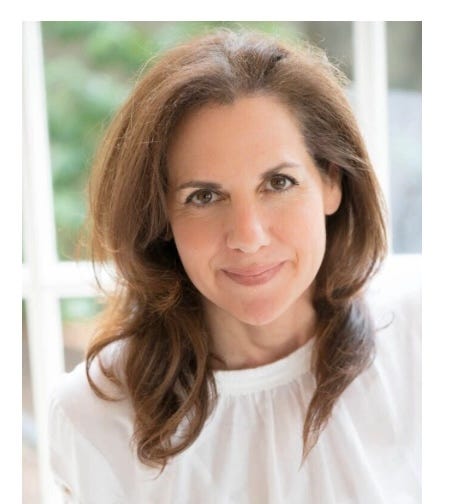
Julie Levine is Editor at Large at sneaker wave magazine. She is a former parenting columnist at The Jewish News of Northern California and received her MFA from Pacific University in June 2023. She is currently at work on a memoir.
This piece is so comforting to read -- what a beautiful story of continuing to find safety in new circumstances. Thank you for sharing it, Julie.
A beautiful story crafted with art and love. Thank you for sharing ❤️