


IN THE FALL OF 1992, my mom walks me to C’s house for the first time for C’s birthday party. I am eight and she is turning nine. Our birthdays are three days apart. I was invited along with the other girls in our age range that live in the circle of houses tucked into the hillside of a river valley. We are all stuck here, stuck together because getting anywhere else requires being in a car.
We sit shyly in a circle, and our small fingers pluck the best colors from the plastic box of plastic beads. I sit next to C, my friend, with my legs folded in front of me and notice how long and dark her eyelashes are. She gives me her phone number on a pink sticky note. When I get home, I write it on the index card that my mom keeps next to the phone with all the important phone numbers on it.
It is the Wednesday before Thanksgiving, 1995. I am eleven. Outside, snow falls in small, sparse flakes onto bare branches and brown grass. I am standing in the doorway to the kitchen of my best friend’s house. An oversized, heather gray sweatshirt I stole from my dad hangs from my shoulders to above my knees. The sweatshirt has an orange and purple scene of a sunset with a puffy mountain lion silkscreened overtop of it. I can feel the ponytail at the back of my head, still damp from being put up after I washed it.
C’s mom scrapes glass and liquified pumpkin pie filling from the stove top. She tells me the pie was still hot from being in the oven; she forgot to turn off the burner when she set the pie down, and the glass dish cracked apart. She is crying but not crying while she’s doing this, against the backdrop of four days of unwashed dishes. I feel befuddled but am trying to ignore it. I don’t see adults cry very often and it’s clear she doesn’t want anyone to see her crying over a split pumpkin pie.
C’s house haunts me.
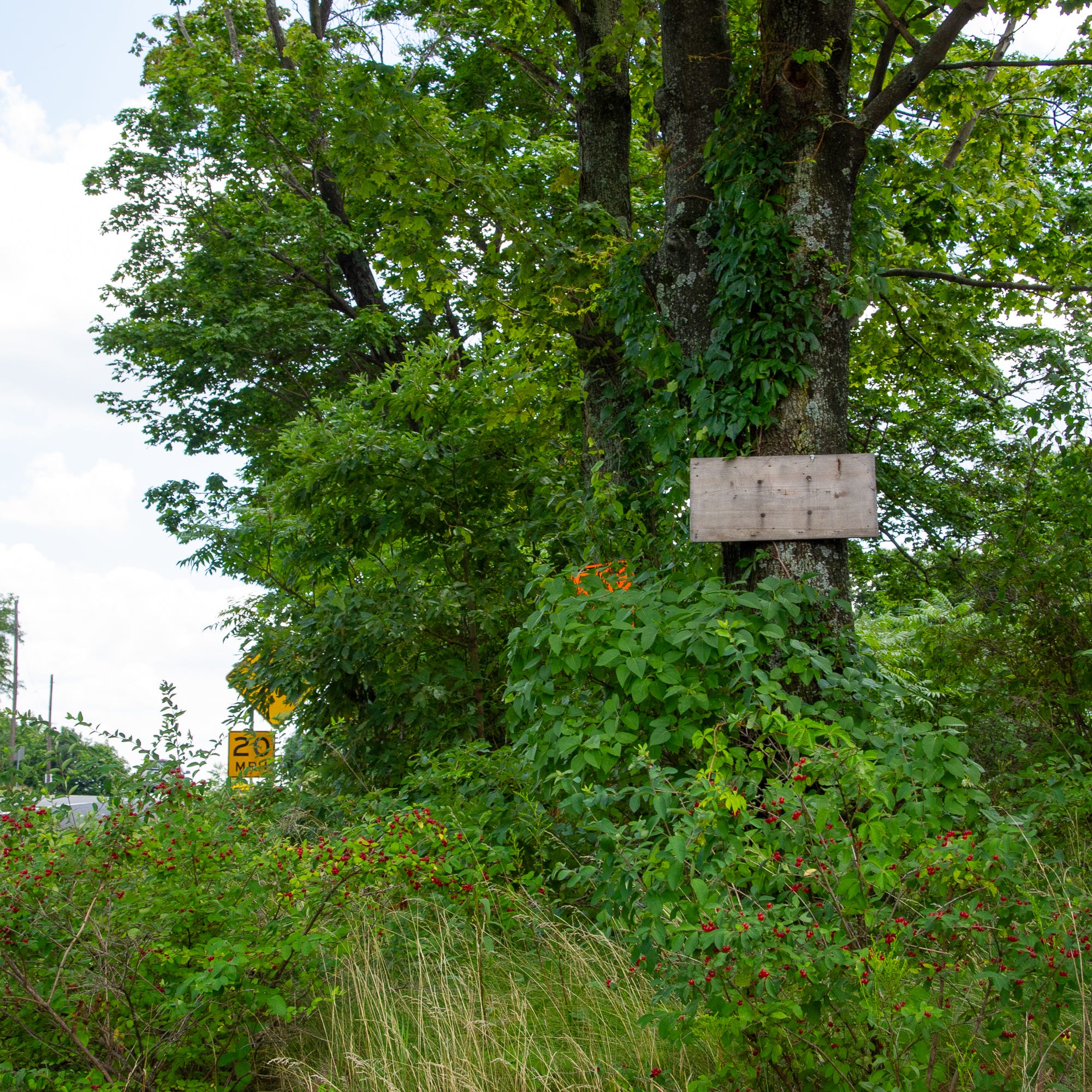
Being barefoot is not a gamble to take there. The once-white linoleum kitchen floor, now grey, peels in sheets and the edges get stuck to my socks. The kitchen table seats eight but is a dumping ground for deflated pool toys and soccer cleats and homework and cans of Pringles chips that haven’t found their way into the over-stuffed pantry and single cans of Pepsi, Mountain Dew, Dr. Pepper. All but two of the high-backed chairs are draped with strands of plastic beads, damp swimsuits, tangled shoelaces, a sock monkey, plastic bags shoved into plastic bags. Large windows look out into the yard; the top branches of an enormous ash tree filter the sunlight a pale green. The kitchen is a throughway, a stop-over for her family’s flotsam before they all scatter to other parts of the house. Her younger brother sits on the floor in the living room in front of the TV while her mother endlessly folds laundry into towering piles on the couch. Leaning close to a computer monitor, her father perches on a wooden office chair that squeaks horribly under anyone’s weight. Four cats find hiding spots or perches or a pool of sunlight. A husky, one of three, paces the hallway from front door to side door and back. And we, she and I, wander in and out of each room.
Her house’s filth and smell and piles overwhelm me, but her house is also an escape. It is the place where I spend most of my time, next to my own home. My home is as much of a showpiece as a bi-level house with white vinyl siding in central Pennsylvania can be. No dust on the baseboard. No drips on the front of the stove. Carpet vacuumed with baking soda once a week. Glass bowls of candy and fake flowers arranged tastefully on the corners of tables. Country decor mixed with dark-stained, cherry wood furniture. My dead grandmother’s wedding china in a hutch with lights and glass shelves.
Under the surface, my house is the equivalent of my best friend’s house. Messy, explosive, confusing. I listen for changes in the emotional weather. My body senses the oncoming clouds of conflict and anger’s storm. I make myself useful. I translate from one parent to another, an emotional ping pong ball of anxiety, bouncing around between rooms.
I am twelve and she is thirteen. We are 362 days apart. I make myself a sandwich of Martin’s potato rolls, Land-o-Lakes American cheese, Kraft Mayo on the cleanest corner of the table. My best friend sucks room-temperature Pepsi from a can. She sits on the kitchen counter, swings her legs back and forth, and bangs her heels against the cabinet. I toss the steak knife I used because I couldn’t find a butter knife into the days’ old dish water. It doesn’t occur to me that the only person who does the dishes in the house is my best friend. Together, we venture to the computer room to watch MTV’s Total Request Live from a small television perched on a broken tray table. We sit close, our legs tangled.
In the diary we share, we write pages about who we like and hate and crush on in looping cursive. She carefully dots her i’s with hearts; I do not. I write lists of the clothes we should get and share, and she makes notes about what boys she thinks I would be cute with. We plan each other’s outfits for the upcoming school dance. We cover the pages with highlighter peace signs, doodle lopsided yin-yangs in the margins. We pass it to one another in the hallway at school, a rectangular, spiral bound secret just between us.
In her room, we stretch out on the unvacuumed carpet close to one another, hips pressed tight. We record ourselves talking about bands and boys and clothes. We laugh hysterically into the small microphone square. We mail a copy of the tape to the local pop radio station, our thin lifeline to a world beyond our small town. We are convinced that they will absolutely give us our own radio hour.
We cuddle in her pale-yellow sheets on Friday nights and tickle each other until we scream and pee our pants. We take turns showering in the small, musty upstairs bathroom. We talk to one another through the thin shower curtain about nothing, perched on the edge of the sink.
In her house, there are tumbleweeds of dog hair, cats grooming themselves on laundry piles, sideways comments. Random acts of sibling violence. The taupe couch with dark outlines of a body, smelling of sweat and unwashed ass, where we watch hours of daytime talk shows from a press-board entertainment center with two TVs and three VCRs.
When the phone rings in October of 1996, I can hear her mom answer it through the thin walls. There’s a pause before she yells up the stairs at my best friend to pick up the phone, which she can do because her mom insisted that she have her own phone in her room. I can tell by the twinkle in her eye, the way the smile spreads across her face, it’s him. She turns her back to me and asks how his day was. I flip through her closet, trying to not listen, expecting her to keep the conversation short. She doesn’t and I walk home early.
In the spring, the two of them get caught by our math teacher finger-banging in the girl’s bathroom at school. They get detention.
The third bedroom was once a playroom. The room is narrow, long, with a single window on the back wall. The walls are painted yellow. We used to play Barbie dream house on the rust-colored carpet. It has now become a dig site of their family archeology and fills slowly over the years with old toys, school papers, unneeded clothing, her dad’s silk ties. Her brother sleeps on the couch, rather than his own room. Why is there so much paper? Her dad prints emails and stuffs them into file folders.
Ungovernable.
That summer, we swim in the above ground pool her dad bought with a small bonus from his job. The water is green because the pump is too small for the size of the pool, but no one has gotten around to fixing it. Matchbox Twenty drifts out across the chartreuse water from the tinny speakers of a battery-operated radio. I float in an inner tube shaped like a flamingo and ignore my best friend and her now-boyfriend making out on the other side of the pool. I squint behind my cat eye sunglasses. The sun filters through puffy clouds and cicadas buzz low.
I seethe with jealousy and longing as they giggle and whisper. He’s not supposed to be here and I’m not sure how he managed the three-mile bike ride from his house in town to our neighborhood on the hill. I want him to leave. I want all her boyfriends to leave because whenever she has one, she turns away from me and I ache in an unfamiliar way, a sharp ache that travels from the center of my chest to the palms of my hands. I don’t tell her because I don’t understand that telling my friend my feelings is what friends are supposed to do. I don’t understand the longing inside me, only that it feels tangled up with loyalty. If she and I are best friends forever, like our gold half-heart necklaces say, I cannot bear someone else getting more of her attention, her time, her joy.
The water stays that color through two whole summers. So do I. We swim anyway.
It is 1998. Her mom rubs the thick, white sole of her sneaker against worn olive-green carpet to get the pet hair out. She picks it up in clumps and walks away with an overflowing fistful. Her brother flies down the narrow, long stairs in a cream, cracked laundry basket, surrounded by pillows. His dark-haired head dents the wall, just under the framed print of a blue-eyed Jesus that hangs from a single nail.
On a snow day, C cajoles me into going for a walk on the road which draws the boundary between the safety of our neighborhood and the lawlessness of out there. We slide, shimmy, fumble down the hill in our snow boots and bulky winter coats and pants. My hat is too big because it’s my dad’s and her snow pants are too short because they’re for someone half her age. She throws herself into a snowbank on the opposite side of the road and makes snow angels. I see someone coming towards us and when they call out, I realize it’s the boy who stuck his fingers inside me without asking. She, like everyone else, believed I wanted it. I get sick to my stomach as I think about the names I was called last spring when everyone at school found out. When I realize she’s happy to see him, when they laugh and joke like friends, I smile with my jaw clenched.
My basement is half playroom, half utility room. Clean. No cobwebs. A stack of chairs, an old banjo, and a treadmill are stored under faded floral printed sheets to keep the dust off. My toys occupy a corner, delineated by thin blue carpet. The coal stove, black, hulking, glows orange in the winter. I like the smell of the clean concrete floor so much that I press my nose into it and lick it when no one is watching.
At her house, the basement is a horror show. If the long, narrow room upstairs is an archeological site for her family, the basement is their family’s mantle, shifting slowly under the chaos above. Lit by two single bulbs hanging from cords, shadows fall deep and long over unknowable lumps. There are kiddie pools for litter boxes and they are overflowing; piles and stains dot the concrete around them.
In January 1999, when I tell her that my parents and I are moving in the summer, we sit on the floor of my bedroom and try to talk about what it means. I don’t know what it means. I just know I feel relief because I don’t have to go to the high school where I was sure there would be more bullying. I am also scared because I have to start somewhere new and I have no idea what it will be like. As the movers load boxes into the semi-truck, we cry in the backyard, our foreheads leaning against each other’s shoulders. We spend hours on the phone every Friday and Saturday night, into the wee morning hours—for the first month.
When my parents get the phone bill that month, they quickly put an end to our marathon phone calls and ban me from using the cell phone after they go to sleep.
On my eighteenth birthday in 2002, we each drive an hour to meet at a diner on route 309 so she can give me my present. My nerdy boyfriend comes with me and the three of us have a strained conversation in the parking lot. It doesn’t occur to me that she would want to spend time with just me. I turn away from her, my floppy-haired boyfriend at my heels, and drive the hour back to my parents’ new house.
The Wednesday before Thanksgiving 2004, she is driving her fourth-hand silver Mercury home from her first semester at college. It is around 9 a.m. when a drunk driver plows into her driver’s side door at about forty miles an hour. She is pinned in the crush of metal and plastic for forty-five minutes and nearly dies on the way to the hospital. When I hear the news from my parents, there’s a numbness in me that blooms and expands. I visit C at her parents’ house a few weeks later. I take flowers and a card. She is bruised and has broken a femur and ribs and several other bones that I don’t know. She can’t walk on her own. I decided I can’t stay for more than a few minutes. Seeing her struggle to walk and needing help just to use the bathroom feels like witnessing a private moment that I shouldn’t. It also breaks my heart. It doesn’t occur to me that I should tell her that because, again, I don’t understand that’s what friends are supposed to do.
We become ghosts, draped in faded floral sheets, with a shared history.
My aunt and uncle live in the same neighborhood as she does. Over a winter break from college, my family has a jovial party the day after Christmas. As I am leaving, I see her, her brother, and her boyfriend emptying the contents of the basement into a dark green dumpster. A warm flood of embarrassment fills my body when I think of the push-pull between us, of how I’ve acted towards her. Anger surges when I think about the way she treated me. I don’t wave or stop to say hello.
It is April of 2010. I open a large white envelope and pull out a wedding invitation. She’s getting married. I go with my girlfriend. Her brother goes out of his way to greet me and escorts me to my seat. He is wearing his Marine’s dress uniform and he beams at me. I realize halfway through the ceremony that he’s had a crush on me all this time. It oozes through my brain and into my chest and shifts my perspective of him, of his annoying little brother schtick.
After the wedding, she and I say hello in the receiving line but don’t make eye contact. At the reception, I talk to her mom and feel achingly earnest about the gift I gave them, which is a framed photograph of mine. When my girlfriend comes back from the bathroom, she tells me that one of the women in the bathroom asked another if she saw the dykes. They mean us; we are the only queer couple there. Heat rises at the back of my skull and my vision narrows. We leave immediately and I am so upset that I can’t tell my dad why we’re leaving. I refuse to go back into the reception hall. I drive twenty minutes to my aunt’s house, screaming about how much I hate this town, these people.
I am forty-one and she is forty-two. I look up the house’s address on Google maps; click down the same roughly paved road I walked to her house. Standing digitally in front of it, I see that the ash tree is gone. The house is smaller than I remember but it surprises me that my grief is not.
About the author:

Shelby Skumanich is a writer and artist based in Colorado. Her work explores queerness, embodiment, material culture, and the emotional architecture of place. You can find her at https://substack.com/@smskumanich.
The artwork for this piece was taken by Shelby Skumanich.