


AFGHANISTAN, MID-2013—THE HELICOPTER sat on a dirt landing strip outside Gardez. The security officer handed me a bulletproof vest two sizes too big and told me to sit on it for the flight.
“The shooting comes from below,” he said.
The vest was UN blue and worn at the seams. Not new. The Velcro rasped when I folded it shut and slid it under me on the metal bench along the helicopter’s side. The bench had no padding—just rivets and frame. I kept adjusting until the armor plates stopped shifting and my spine learned the rule.
It was not a proper airport, just a widened road, and the takeoff site sat away from the compound, beyond its ring of security. The dust never fully settled there.
We lifted off. The shots came at once, while we were still low. My hands went flat on the bench. My jaw locked. The vest absorbed the impact. The pilot held course; the flight was not interrupted. Only after we landed in Kabul did we piece together what had happened. The incident report grounded flights for a while, until someone could promise the site was secure. There were few helicopters for the whole mission; one pulled for review could not be replaced. So we took the road, and the road argued with safety. We kept the windows half-open so glass would scatter outward if it had to. On bends, the driver leaned before the wheel did.
I had been in Afghanistan for three months when I learned to sit on a bulletproof vest while on a helicopter. I didn’t learn that rule on arrival. I learned it the day I transferred East.
After overnighting in Dubai for the visa, I flew into Kabul and landed with a suitcase and a law degree. At the airport a driver held a sign with the wrong spelling of my name. I got in the car anyway.
I was in my thirties. A few years earlier I had left a bank in Argentina, a law career, an apartment I had carefully furnished, and spent the time since moving through India, Nepal, South America—looking, I told people, for something I couldn’t name. Kabul was supposed to be where the looking turned into work. I had assumed I would stay in the capital. I had no idea what I was meant to do, or where, or whether I could.
The head of my unit was Canadian, though not the smiling kind. She looked at my clothes over a plastic cup of what someone called grenade juice. She pointed at my scarf: acceptable. Jeans not. Stilettos recommended—as if Kabul were Milan. She had bought the juice in a plastic cup herself. I would learn only later that she rarely did kind things; On my farewell, years on, she would appear with champagne. Thin, hard, always in heels. I admired her for a long time.
The subject changed to my posting: the UN human rights unit in Bamyan, in the central highlands, to monitor civilian harm and abuses against women. The “unit” was me and three Afghan colleagues. No women’s protection division. Civil affairs was on medical leave. Our job was to document: verify, write, send to Kabul, hope it mattered.
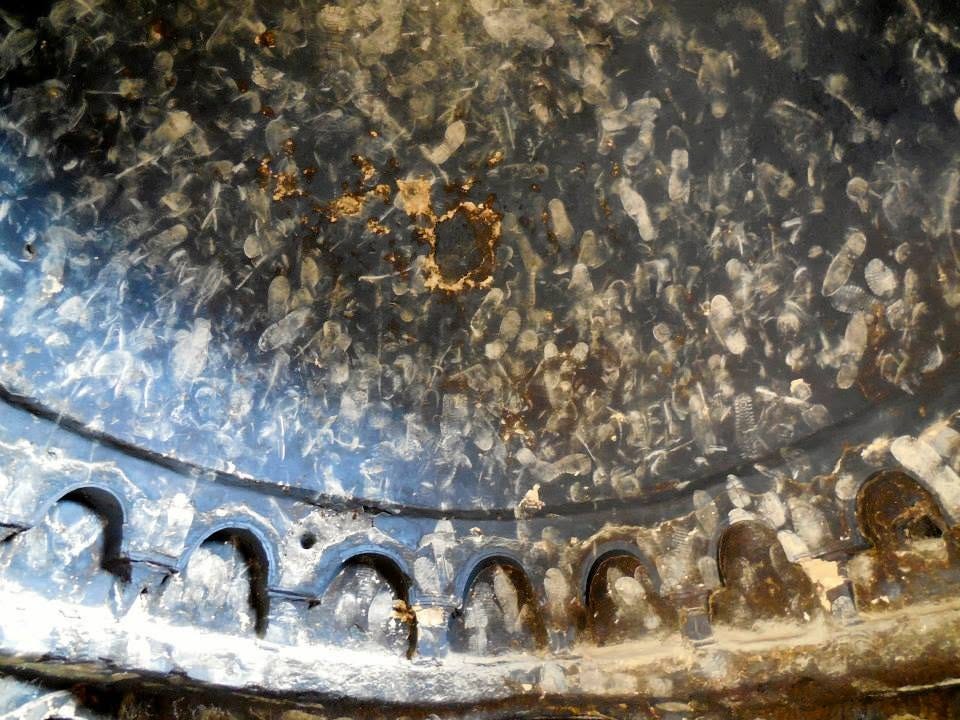
The Buddhas’ niches stood empty above the valley, scaffolding climbing the rock where the statues had been. The cliff behind was a honeycomb—a thousand caves, people said—cut by monks centuries ago, some still lived in. I climbed into one, a small round chamber with a domed ceiling, that had been painted once: at the spring of the dome, a ring of little Buddhas sat in their niches, faded ochre, patient, circling the room. Then I tipped my head back. The whole dome above them was stamped with shoe prints. Hundreds of soles, pale against the old paint, overlapping in every direction—a crowd pressed into the ceiling. They were overhead, on a curved surface no standing person could reach. Someone had been lifted up to put them there. I was told it was the Taliban, the day they blew the statues. I could not verify that, and never tried; the prints were enough on their own. I took photographs that felt like theft and witness at once.
My first week, I interrupted a witness mid-sentence to clarify a detail. My Afghan colleague waited until we were outside. “She wasn’t finished,” he said. After that I learned: if a witness pauses, let the pause stand. Afghans taught me most of what I came to know. Verify; don’t assume. Return if stories don’t align. Don’t perform your shock—it’s not the important thing in the room. Drink the tea.

One of the first cases I worked on was of a girl who had run away to marry a boy her family had forbidden.
Her name was Zakia. She was between sixteen and eighteen. He was Hazara; she was Tajik. That was enough.
When I visited the women’s shelter, it was already tense. The building sat behind high walls and a metal gate. Inside, women moved carefully, protected and confined at the same time. Court orders kept some there. Others had fled forced marriages or beatings and been brought by police for their own “safety.” We used to cite the figure—around three-quarters held for “moral crimes”: running away from home, or zina, sex outside marriage, which rape could also be called. Running away was not even a crime in the code; the courts had simply decided to treat it as one. In that shelter it stopped being a statistic.
Zakia spoke quietly but without hesitation. She insisted she had not been kidnapped. She had chosen.
That word—chosen—was the charge against her.
Her father had filed a complaint. Relatives had threatened them with an honor killing. Police had already detained women who had helped Zakia. The provincial director of the women’s ministry was under pressure for intervening. Every institution was moving, and all of it converged on Zakia: prison if the court took her, death if the family did, danger to anyone who stood between.
By then the story had garnered international press. The phrase “Romeo and Juliet” began appearing in print. A New York Times reporter started following the case. I crossed paths with him at the shelter entrance once, his translator next to mine. He was doing his job. I was doing mine. I sought guidance from Kabul: what was our position when global coverage risked inflaming local tensions?
I had no authority to ask a foreign correspondent to hold a story. Even if I had, I am not sure it would have changed anything.
I remember standing in that shelter—Zakia sitting cross-legged on a mattress on the floor, her hands still—calculating what my report could change and what it could not.
If she left the shelter, she could be killed. If she stayed, she could be charged. If the story grew larger, she became more visible and less safe.
I could verify the threats. I could record that she said she had left her home on her own. I could document the risk of detention and the prevalence of abuse in custody. I could note that shelter protection functioned as a form of house arrest.
I could not promise her an outcome.
After that, I asked for the East. Civilian casualty tracking was a priority for the mission, and the East was where most of those cases were. I was finishing a Master of Laws focused on international humanitarian and human rights law, and I wanted to see where the rules I had been reading about actually applied—or failed to. That was the reason I gave, and it was true. Gardez was different from Bamyan: bigger compound, higher walls, fewer trees. About ten of us inside, only expats. National staff stayed in a guesthouse beyond the gate. I was the only woman for a while. Then two others arrived; one didn’t stay long.
Casualty tracking was not abstract. It was a list.
Name. Age. Sex. District. Weapon type. Circumstances. A field for “civilian.” A field for “possible DPH—direct participation in hostilities.” Three words that could move a person across the page.
We verified each entry twice, sometimes three times. A missing age changed the story. A wrong coordinate shifted responsibility.
One file stayed open on my desk for weeks: a wedding in a rural district outside Gardez. A drone strike had targeted a man alleged to be an insurgent commander. That part was repeated often. Less repeated were the names of the others. A cousin. A girl of twelve. Two women who had been in the courtyard preparing rice.
We drove out days after the incident had taken place. The courtyard wall was blackened. The metal trays were bent into soft shapes. A mother showed me the burn on her daughter’s arm and asked whether that was “necessary.” Months before, I had been writing about drones and proportionality in abstract language. In that courtyard, I had no answer for her.
Another case involved three shepherd boys in a district known for drone surveillance. Villagers had started weaving images of drones into carpets—long grey bodies, wings stretched like insects. Children knew the shape before they knew the word.
The boys saw one overhead and climbed a tree to look closer. Later, an elder told us they thought it was a machine, not a weapon. The strike followed.
By the time we arrived, the International Committee of the Red Cross had already collected the remains. I saw the bodies before they were wrapped. They were smaller than the reports would later make them. One still had dirt on his hands from climbing.
In another case, a night raid in a district outside the capital was reported as a strike against an insurgent compound. When we visited, the house belonged to two brothers. One had a land dispute with a neighbor who, people said, had made the call. In the official report, the target was described as “associated.” In the courtyard, the association was a shared irrigation ditch.
In one briefing, a commander pointed to a still image and said, “That cluster, probable militants.” On our side of the table, the same cluster had names.
The strikes continued. The files traveled. They went into briefings and meetings with commanders, into arguments over rules of engagement and definitions that suddenly had faces. Sometimes the international forces’ answer was denial. Sometimes it was a promise to “look into it.” Sometimes, months later, a tactic changed in one district and you couldn’t prove causation, only notice the pattern and keep watching.
The same week we documented the wedding strike, we visited a police station with newly hired female officers. New to uniforms, old to reality. They asked for a toilet they could lock and the right to carry a gun. When foreign delegations visited the mission, the women were staged like a show—arranged, photographed, thanked. Arrive unannounced and you found them cooking, cleaning, holding a station not designed to include them.
I still think about those women. And about the young Afghan colleague I encouraged into fieldwork. I thought I was opening a door. Years later I understood I had pushed her toward exile. To work with an international organization was already to be marked—a woman traveling with foreigners, staying in compounds where men slept, was not, in the eyes of her neighbors, a respectable thing. In August 2021 the Taliban came back, and the doors became the danger. Five years on, the undoing is nearly total: girls stopped school at sixth grade, women gone from the offices, the courtrooms, the parks, told to lower their voices in the street. The policewomen’s station, the locked toilet, the right to carry a gun—all of it might as well have happened in another century. The visibility I had called opportunity became the thing she had to flee.
After those briefings and site visits, we went back behind the walls and tried to live.
The compound in Gardez held its own customs. On Thursday nights, after we sent the weekly casualty figures to Kabul, we shuffled cards under fluorescent lights. The same hands that counted bodies counted chips. On Sundays we played basketball on a cracked slab inside the compound—nationals and internationals, no vests, no ranks. I was the only woman on the court and I was good.
We kept animals we shouldn’t have kept. Disco was an Afghan shepherd, assigned to me by the chief of security. One ear always tilted toward some pressure change the rest of us couldn’t hear. He heard the blast before the siren. A woman in the compound tried to take him—left treats at her door, called him over. I stopped speaking to her for a week. In a place where everything else was hard, people reach for your softest thing. I kept Disco. I kept that boundary.
I collected carpets from Ghazni and Herat—deep reds, tight knots. Patterns steadied the room in ways briefings couldn’t. My team gave me one with a drone woven into it, grey body, narrow wings. We laughed when I unrolled it. I lost it later, in transit between assignments. I still don’t know where it went.
A year later, mid-2014, I rotated back to Kabul, the capital. The walls were higher there. Vehicles checked twice. Badges scanned. Gurkhas at the gate, quiet and exact. We did not roam. Movement required clearance, timing, coordination. Inside the compound, prefab rooms lined narrow corridors. The generators never stopped. On some nights, a pot of dhal appeared from the Gurkhas’ kitchen corner and filled the corridor with something close to mercy.
Delphine arrived in Kabul in mid-2014. We met at a colleague’s party. She is French, a bit younger than me. We became Coco to each other because of a passport stamp—she’d been to the Seychelles on R&R and the entry stamp was a coconut that looked unmistakably like an ass, round and generous. We couldn’t stop laughing. That was it. Two weirdos who recognized each other. We carried bottles of cava back to her prefab, sat cross-legged on narrow couches, and argued about how to fix anything at all—torture cases, dumb intrusions by internationals, the gap between briefing language and what we saw. So naïve. So necessary.
I met a man during this mission. He told me I had never been safer. His weapon was pointed low, safety on. I believed him about the perimeter and not at all about myself. Next to him I felt the opposite of safe: the unsteadiness of something starting. For a while it was the best thing in that walled place—someone to find at the end of a day spent counting the dead, proof the body could still mean something other than risk. He rotated out of the country before I did. After that it was messages, from Bagram, from Washington, a relationship run across time zones and clearances, real enough to ache. What he wanted, in the end, was a smaller life for me—quieter, nearer him, the work set down. For a while I let myself consider it, let myself imagine giving up the work, and that frightened me more than anything he asked. He ended it before I could answer. I could shrink for a man who had already gone, or I could stay my own size. I stayed my size.
The day Farkhunda was killed, I wasn’t prepared.
I had worked on forced marriage cases. Shelter transfers. Files thick with family disputes. I knew how to log injuries. I knew how to calculate risk.
I did not know how to watch a crowd beat a woman in daylight and set her body on fire.
We watched the video in silence. Coco stood beside me. The footage shook as the crowd closed in. Someone shouted “burn her.” Someone else filmed.
I paused the frame and zoomed in on the police uniforms at the edge of the circle.
We called the hospital. The line crackled. Yes, they confirmed a female patient. No, she had not survived.
I put the phone down. I didn’t know what category to open. Not a drone strike. Not crossfire. Not a night raid. A crowd.
Working the case meant reconstructing the sequence before the rumor replaced it. We reviewed footage frame by frame. We interviewed witnesses who lowered their voices when they described which officers stood by and which walked away. We met her family in a room where the television was off. By afternoon the accusation had hardened: she had burned a Quran. By evening it was being repeated by men who hadn’t seen the first frame of the video.
I remember the moment I wanted to say, even if she had, and didn’t.
Not because I believed it, but because I was suddenly aware of my own accent, my foreignness, how quickly a question can be misheard as contempt.
The room felt narrow with it: the fear of sounding like the West in a place tired of being explained.
Later it came out she hadn’t burned anything. But by then the story had already done its work: a rumor becoming permission.
And the part I still don’t understand is not the lie. It’s the appetite. Why that many hands? Why that kind of killing in broad daylight, in the center of the city?
Protests filled the streets. Some demanded justice. Some defended the mob. Days later, women carried her coffin themselves—a custom broken, deliberately. I watched that too.
A prosecutor opened an investigation. Trials began. Some convictions followed. Months later, sentences were reduced on appeal. Each legal adjustment entered our files as a date, a paragraph, a notation. Procedure was sometimes the only thing standing between a woman and a crowd that had decided she was symbolic.
What unsettled me most was not the shouting in the video. It was the familiarity of the boundary she crossed. She had argued with a mullah. She had spoken back. I thought of my young Afghan colleague in the East, careful with her words in meetings full of men. The line between disagreement and defiance was thinner than any of us wanted to admit.
It did not feel like an exceptional crime. It felt like a warning.
Coco and I followed up on the incident for weeks. At night we sat on the narrow couch in her prefab with the television off, replaying footage and arguing over the sequence. She was steadier than I was. “Stay with the facts,” she said. I tried.
In the following weeks, we went to Kabul University to meet with students. The auditorium was full and hot. I was always hot, overdressed to be appropriate. Some young women asked about legal protections. A young man stood up and said the mob had acted in defense of faith. The room went quiet. No one in the row in front of him turned around.
I left Afghanistan before the work soured.
Not because it became easy. Not because it was finished. There is no finished there. I left because I could still do the work without hating it. I had not yet reached the point I had seen in others—the slow turn toward cynicism, the jokes that cut too deep, the way compassion thins when exhaustion hardens into posture. I could still enter a meeting without already knowing the answer would be no. I could still read a file without resenting the name at the top.
When the offer came to lead a protection team elsewhere, I took it. Myanmar was next. Another context. Another set of walls. People said I was leaving “on a high note.” What they meant was that I was still intact.
Someone handed me a flag that had survived three rotations. It smelled like dust and diesel. I folded it into a drawer years later in Europe.
Afghanistan taught me timing. Stay long enough to matter. Leave before you turn into someone you don’t recognize.
My apartment now is intentional. Blankets that never saw bunkers. Books that are not sandbags. A table for fruit, not checkpoints. Some nights I still wake at a sound that is only a radiator expanding.
About the author:
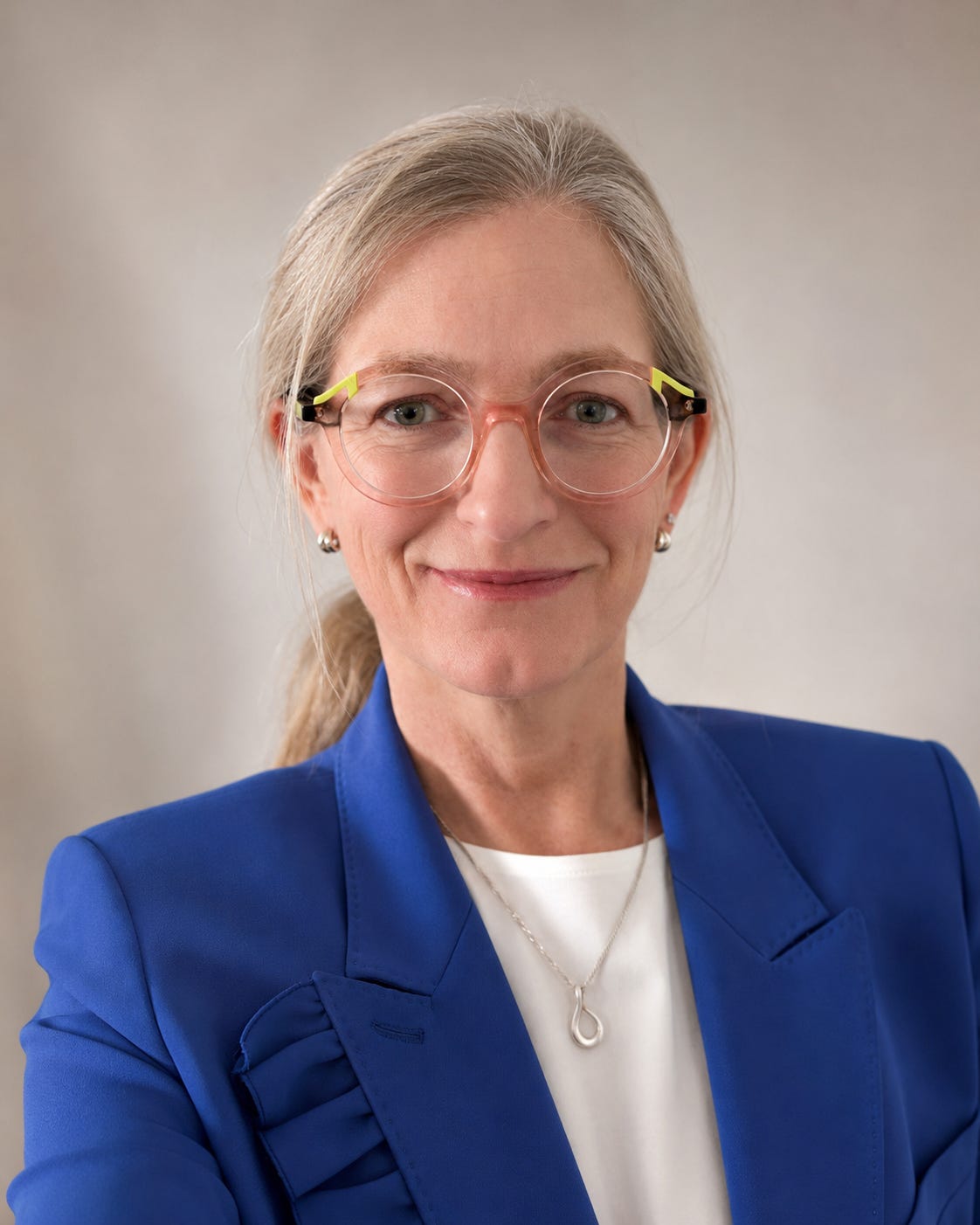
Maria Sol Beker is an Argentine writer and human rights lawyer. For more than fifteen years, she has worked on conflict, accountability, and civilian harm, which is a formal way of saying she has spent much of her life in rooms where language was asked to behave. Her work has appeared or is forthcoming in Republic of Letters and West Trade Review, and her essay “Because I Want To” was a finalist for the 2026 Tom Grass Prize. She writes Field Notes From the Spine on Substack and is based between France and Argentina.
The artwork for this piece was taken by Maria Sol Beker.
Phew this piece is so powerful. One of the parts that stays with me is the criminal charges that a woman had CHOSEN something for her own life -- feels more familiar than I want to admit.
I think I may have stopped breathing reading this- powerful and important- thank you