


THE FIRST TIME I suspected that my parents didn’t have all the answers was when I was six or seven and home from school, sick, with a fever. I was sniffling and telling my mother about how we had, the day prior, learned about Noah’s Ark in school. (I attended Our Lady of the Cenacle, the local parochial school in Queens that has since closed.) Sister Theresa, of whom we were all terrified—with her stern Boston accent and the thick wooden paddle she kept close as a threat—told us the Biblical account at story time. I remember her growing upset when Butch, the biggest kid in our class, interrupted her and began whispering to the girl next to him. We all feared she would hit him with the paddle, but somehow, she let it go with a loud scolding. As a child it seemed improbable to me that Noah would have been able to locate, capture, and arrange for boat transport two of every type of animal on earth. And there were other practical issues apparent even to a child. Certainly, physical space would have been a problem. And there are just so many types of bugs and insects in the world: where did they all go? I didn’t understand how Noah would even be able to find, let alone gather, two of each of those. My mother explained away one objection by saying that the Ark was “really, really big.” As to my bug objection, she said all the insects on earth crawled into the hair on the animals. I met this with even greater incredulity. So, they got to dry land, she would have had me believe, hitching a ride with the big game. I do recall the foul-tasting medicine my mother gave me that day, getting drowsy while watching cartoons, falling asleep, and dreaming about the Ark and all of the animals. My head, full of fever, fought against all the animals fitting. There were just so many of them.
My willingness to doubt some of the standard stories I was hearing from my parents and from religion class led me to lose my faith early and declare myself an atheist while still a young teenager. But that’s not my angle here. This has nothing to do with god and everything to do with animals. Just like with the Ark, throughout my sixty-two years, there has not been enough room in my life for the animals. In fact, for animals of all types, there’s been no room at all.
When I was eight, something horrific happened to me. I was playing ringolevio with a few of the neighborhood kids in front of the Milini’s house when the alarm sounded: “Prince is loose! Prince is loose!”
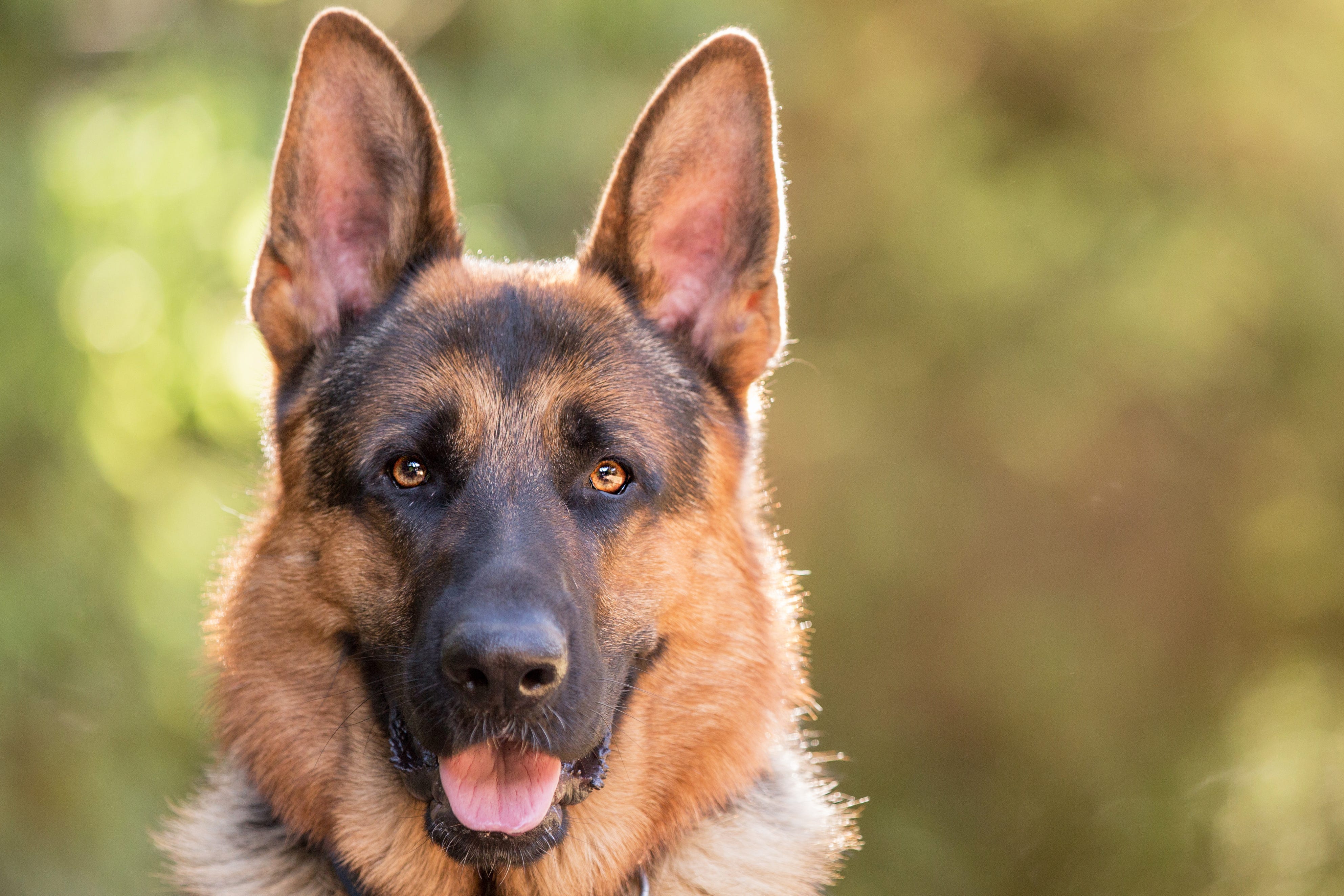
Prince was the Milinis’ German shepherd and the most feared dog in the neighborhood. At the instant I heard the cry I was standing on the sidewalk in front of their long driveway. I froze and resisted the urge to run. (My dad had always told me this was the safest tactic to take if a dog runs at you.) But I was terrified and trembling as this hundred-pound monster, much bigger than me, galloped straight at me and leaped up, knocking me down. While I was flailing on the ground, Prince caught my skinny right wrist in his mouth and bit. Through pure adrenaline, I bounced back up and protected my face, but he knocked me over again, this time biting me just above the mouth. Danny, the older of the two Milini boys, came charging and tackled their dog and all three of us went down, but the dog violently shook him off and jumped up and knocked me down a third time, grabbing my left hand this time and biting down hard where he found skin. Mr. Milini flew out of their side door and pounced and wrestled the dog down as Mrs. Milini, a step behind her husband and also running and—I distinctly remember—crying, plucked me up and cradled me in protection against their mad dog.
It was over. Three times I had fallen, and three times I had forced myself up, with help. As happens in the lives of children when a crisis befalls them, the adults swooped in and their mechanisms took hold and I passively surrendered to those charged with taking control. Though numb and stunned, this was my fate, or so I understood it.
My parents rushed me to the emergency room, and a doctor stitched up my wrist, top and bottom where a clear bite mark still shows, almost fifty-five years later, and my face. The bite on my hand didn’t need stitches as it was a small bony hand, and the dog didn’t have much skin to tear there. But I was left paralyzed in fear, my body beaten, bitten, and horribly sore. They gave me something to sleep and my father must have carried me into the house that evening as we returned home. My mother was crying; that I remember, as I also remember the pretty woman across the street who, upon her return the following evening from work, saw me all bandaged and recovering on our wrap-around porch; she came over, shook her head, and told me that I was a brave boy.
She sure was bright and sweet, like a lollipop, I remember thinking, and that was the first thought my shocked consciousness was able to formulate other than its stunned questioning of a god I thought would always protect me. I just couldn’t understand why he’d allow this to happen. I had taken my First Communion a year earlier, and every day I still wore around my neck this cloth scapular with a picture of Jesus that I was told, before Prince’s attack, would protect me against all harm. I had questioned how such protection could be assured when it was just a picture on a piece of material dangling from a string. I was told it just was. God always has the last word, even though sometimes logic is larger than him.
Time tripped on, as it does. A horrible phobia of all dogs, regardless of size, developed throughout the remainder of my childhood. I was rendered near-paralyzed with fear in the company of dogs and wary of all animals. I developed strategies to avoid dogs—friends’ homes not to go to; a faked upset stomach to keep me home; a longer walk to bypass the dog on that one block by school. Yet dogs are ubiquitous and hard to completely elude. They are supposed to be man’s best friend, or so we’ve been told. But not Prince, and not for me. Not only had Prince attacked me and left scars that have lasted a lifetime, but as I was apparently the second person he had bitten, the Milinis were forced to put him down. I heard the news with indifference at first and then with a budding validation of sorts as my young mind wrestled with it. But the Milini boys didn’t see it that way. I was the cause of them losing their dog, and they blamed me.
A few years passed. While dogs still terrified me, cats, being much smaller and not often in a position to hurt me, existed in my presence without much thought on my part other than an occasional flared disdain. This disdain wasn’t without prompt though the cats themselves were, I must admit, blameless. Their benefactor, with the best intentions for their well-being, no doubt, did unwittingly cause the neighborhood to find fault with the cats. Miss Eileen was an old, spinster lady who lived with her spinster sister, just the two of them, in the run-down and unkempt house next to ours. They were the neighborhood cat ladies who fed dozens of stray cats, and so the overgrown and neglected property next to ours became the home of tabbies and tomcats fending as best they could.
One cold, winter Sunday after we returned from Mass in the ’71 Chevy station wagon with the faux wood panels, as we awaited our usual Sunday pasta dinner that always started promptly at one, Mom asked my dad to pick up something from the grocery store. He asked if I’d like to take a ride. We left and got into the car and when my dad turned the ignition key, we were met almost instantaneously with what sounded like a human scream from under the hood of the car. My dad quickly turned off the car and got out and lifted the hood. He grabbed at a now dead cat who, he later explained, must have climbed up into the engine compartment for the warmth it provided just after the car had been turned off when we returned from church. The scream of the cat had alerted Miss Eileen, and I witnessed my dad carry over the dead cat and, hat in hand, apologize and explain what had happened to this time-worn, angry woman. A few years later while reading To Kill a Mockingbird in school, I was reminded of the interaction between my dad and Miss Eileen and the dead cat by the scene in the book where Atticus greets and compliments the old, cantankerous Mrs. Dubose on her geraniums and camellias which later in the book Jem destroys. The parallel has stayed with me a lifetime.
For my ninth birthday I wanted and received a pup tent as a present. My mom enlisted a local eighth grader who was friends with my sister to set it up in our backyard. I played with my toy soldiers in the tent which was just small enough for one person. The tent was supposed to be waterproof, but I wanted to test that out. So the next time it rained, I went out the back door and on my count of three, I held my breath and ran as fast as I could while trying to dodge the rain, then dove through the zippered down slit in the tent that served as an opening, and slid the foot or two on the canvas tent bottom, my eyes closed from the exertion. A moment after impact, my forward momentum pushed me toward the canvas tent wall and when I opened my eyes, I heard a high screech and saw and felt across my face a trapped cat’s paw with his claws swiping like talons. I screamed, and the cat jumped over me and escaped.
For the second time in my short childhood, I had been attacked by what was supposed to be a pet. This time I was again shocked and scared, but it was certainly less serious than when Prince had attacked me. I knew that the cat had just sought to get out of the rain, but imputing logic for the motivation of an adversary doesn’t lessen your anger against that adversary.
My phobia of dogs was heightened by the cat incident as now I saw even the tiniest of dogs—still bigger than the scratching cat—to be a threat. Curiously, though I was now really afraid of cats too, cats never seemed to want to get close to me, whereas dogs always did. Still, I spent more than the next decade escaping close proximity to all animals.
It is hard to describe how pervasive a real phobia can be. The fear becomes disproportionate to any real, objective measure of harm. All dogs—and cats—terrified me. Upon encounter, the resulting physical reactions are what you’d expect: heart pounding, lungs straining, muscles clenching, sweat coating. And of course, my goal was always to get away, to escape the immediate danger which in my mind all animals posed.
One image that has stayed with me since childhood is that of the two Doberman pinschers which guarded the house adjacent to my grandmother’s house, which lay within sight range of the church that was such an important part of our lives back then. But after the attack by Prince, I had given up any pretense that god was watching me or protecting me from predators, canine, feline, or homo-sapient. I knew I was on my own. So, when these two Dobermans saw me coming up the walk to my grandmother’s door, regardless of whom I was with—my whole family, or just my mother or father, or one of my siblings—these giant dogs would rise up on their hind feet and bark terror into my soul. They’d get so excited and try so hard to get over the four-foot fence separating them from me. I was always sure they’d leap over and attack me, Prince-like, and that this time, the encounter would end me. Helen, the old German lady who was my grandmother’s neighbor, would sometimes hear their clamoring and come out and try to quiet them, and calm me. In her thick German accent, she would attempt to reassure me that the dogs wouldn’t hurt me. But it was too late for promises of that kind. If god himself couldn’t be trusted to keep a promise, I knew that this diminutive lady couldn’t either.
But it wasn’t just big, threatening dogs or freely roaming dogs like wild wolves that scared me. Dogs of all sizes, and dogs on leashes, and dogs behind fences did too. If it barked and had four legs and those jutting, canine teeth, I was scared of it. And this continued with very little abeyance.
To this day, I am still wary of all animals. Especially dogs. However, I would no longer consider myself clinically phobic of dogs, as once I undoubtedly was. As an adult, I can and do completely control my interactions with them—which basically means avoidance—but I don’t ruminate about this now. Occasionally I enter someone’s house and their dog jumps on me, and my immediate reaction is to stand perfectly straight and to look directly ahead while offering no welcome to the animal at all. And I’m now so much larger than when I was a child, of course, so I’m sure that today dogs find me imposing. No, I view the damage that was done differently now, though there is a lasting legacy of it.
When I was in my mid-twenties and the dog phobia was no longer a daily issue in my life, I unwittingly developed my first and only real relationship with a dog. Ironically, it was a large German Shepherd. I was working on my MBA and studying accounting and had a part-time job with Burt Rothbard. He was a local, community-based CPA and attorney practicing out of his home in Syosset, Long Island, the basement of which had been converted into an office. He gave his dog, whose name I can no longer remember, free rein over the entire house. The dog was very old and slow and as non-aggressive a dog as ever I’ve seen. The dog only had three interests: eating, sleeping, and being pet. When we used to eat lunch at our desks, he would often come over and beg for food. At first, I found this annoying. But slowly something happened. I sensed this dog needed me and appreciated the food and company I gave him. This bond strengthened over three or four months and then one Sunday night I had an odd dream—that I was working in the basement with Burt, and doing bank reconciliations on the computer—but his dog wasn’t there. In my dream, I asked Burt about the dog, and he didn’t know what I was talking about. He said he didn’t have a dog. Going into the office that day was uneventful. Burt, the work, the dog—everything was as it had always been. I petted the dog more than usual, truly appreciative of his company now, but aware of his age and mortality.
When I returned to work the next day, Burt told me that the dog had died after I had left the day before. The coincidence was jarring and made a real impression on me, though I never did assign more significance to it than that. Dogs die, especially when they’re old. And people dream, at all ages. I have always laughed to myself when somebody finds a penny heads-up or sees a butterfly and is convinced that it is a passed-on loved one sending a message. There’s no room in my worldview for such thinking. Still, as unlikely as it was, I found that I really missed that dog.
So that is it. Other than this briefest and most fleeting relationship with an old and dying dog whose name I can’t even recall, there’s been no room in my life for animals of any kind. But after living for over 60 years, I can now admit that maybe I’ve missed something important.
I could blame the dogs; I could blame the cats; I could even blame a god I haven’t believed in for decades. But I don’t. I don’t even blame life or existence itself, fatalistic as my perspective is. What happened has happened, and assignation of blame is pointless. Having spoken to others who have pets and who have expressed that special unconditional love returned by a pet, I realize now that I’d like to have such a bond. After all, it is so rare to find that even in members of our own species. I long for that connection and can imagine one day getting a pet—probably a dog—in my old age as a companion with whom to share life when time returns in abundance, and probably a burden, and when memories, good and bad, become largely what we subsist on.
About the author:

John Sergio is the COO Emeritus and was a founding partner of a mid-sized investment bank; he was the COO for over 20 years. He has enjoyed a long and rewarding career in the securities industry and has written a number of articles for national, literary, and financial industry publications. He has appeared numerous times on CNBC speaking on different topics. He is an avid reader of US and world fiction.