


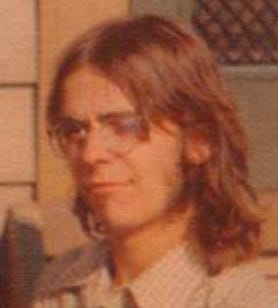
ON A CHILLY DECEMBER MORNING in 1973, Billy O’Connor and I stuck our thumbs out on the M5 motorway that ran through Exeter, the town in western England where we were spending our junior year abroad. The Michaelmas term had just ended, and I’d enjoyed a head-spinning few months, my first time out of the country, everything new and strange. Bangers and beans for breakfast. Hoary old English professors with wild eyebrows, elbow-patched cardigans, and funny accents. Monty Python on the telly! Billy convinced me to join him over the break on a two-week junket to Ireland to chase the ghost of James Joyce while enjoying a perfectly pulled Guinness at the source. We’d hitch around the green vistas of the Emerald Isle, hobnob with leprechauns and entertain the willing lasses with our dashing “American-ness,” then ferry back to England and meet up with school friends in London on Christmas Day. I didn’t know Billy very well—he was a trimmed-up frat boy back at school, where I was a long-haired social miscreant—but here in the new old world it all sounded like great fun. I had no other plans, and most of my peers had already booked two-week jaunts through Europe. In fact, I loved Joyce, and billboards throughout Great Britain advertised “Guinness is good for you,” and who was I to argue? We had our backpacks, snacks, and a solid sense that the ferry to Dublin was somewhere to the north of us. We agreed it was a good omen when we were immediately picked up by an affable truck driver who took us all the way to Newport, Wales, halfway to the ferry at Fishguard and the Irish Sea.
The next day, my first on the high seas, I puked all ten hours on the way to Ireland. When we finally arrived in Dublin, we latched on to a frat buddy of Billy’s, a pretentious chap in an eight-piece cap who trolled us through the pubs on a quest for Guinness and “stray Colleens,” as he called them. We found plenty of Guinness, but oddly the Colleens seemed less than interested in the loud and cartoonish antics of my compatriots. Somehow Bushmill’s got into the mix, and after a lost weekend of waking up alone on dorm room floors with what felt like a shillaleagh bonging in my brain, Billy and I escaped Dublin and hitched south into the grey and drizzly Wycklow mountains. The first night, a farmer dragging a wagon behind his tractor delivered us to our hostel, a stone haybarn open to the elements. We burrowed our sleeping bags into the straw and hunkered down for the night like a couple of lost Nazarenes.
“Maybe the wise men will show up,” I said hopefully.
Billy grunted. “So, whose brilliant idea was this?”
The next morning, the drizzle turned into a fine rain. We pulled our caps low and pushed on, from cheerless pub to dingy hostel, day after night after day. Nutrition and hygiene suffered. We bickered about everything and nothing. Beneath Billy’s sarcasm I sensed he was heartbroken that his beloved Ireland had turned up as a gray, rain-soaked bog. In silence we jiggered our way south to Cork, our final stop, where at least the hostel had a shower, and a bit of heat if you shoved in some coins. I was desperate for England, for Christmas and the warm embrace of my friends.
Later, we turned up at the docks only to find that day’s ferry to Wales was cancelled, and we’d been bumped to the next day, which was Christmas Eve. It wasn’t until the following night, when we were hoisting our bags up the long gangplank, that I fully realized our predicament. The world was mired in an oil shortage, which meant long gasoline lines in America and forbiddingly high prices for petrol in Great Britain. At the same time, workers were striking, and the railroads were trimming their schedules. To save fuel and labor, cars and trains were not allowed to run on Sundays. Or holidays. The biggest of which, of course, was Christmas Day.
We couldn’t afford a cabin, so we made our way to the public deck, where a mishmash of humanity was settling into long rows of uncomfortable looking chairs for the ten-hour trip. I saw a young woman with a tiny infant find a seat. She was thin and pale, with a white shawl draped over her head and around the baby, which she cradled tight to her chest.
“What’s her deal do you think?” I whispered to Billy.
“Probably taking the kid to see Santa,” he said, and carelessly launched his bag onto one of the flimsy seats.
I parked mine as well, and we followed signs up three flights to the Skybar, a cheerless place with laminate tables, plastic chairs, and fluorescent lights that were too bright for my glum mood. It adjoined the top-deck observation lounge, and from the bar I could see Christmas lights twinkling all over Cork. Across the bay a lighthouse gleamed like the Star of Wonder, and for the moment, everything seemed calm and bright. I returned to our table with a couple of Stellas, where my worries resurfaced.
“What, no Guinness?” Billy said. He splayed his arms out like Jesus on a holy card.
“That shit’ll kill you,” I said. “Hey, you know we’re getting in after midnight, right?”
“So?”
Say “so” one more time, and I swear…
“Soooo.” I jiggled my thumb in the air. “How are we gonna get to London?”
“I don’t know. You’ll figure something out.” He flipped open his copy of Ulysses, done with the conversation, done with the whole deal.
This was the first time I’d ever been away from home at Christmas. I’d grown up in a white, Catholic, bedroom community, gifted with the whole shebang: freshly cut tree surrounded by presents, colored lights everywhere, big family dinners, a generous Santa Claus. I served as an altar boy and sang in the grade school choir at midnight mass. But when I became older and too cool for the room, I looked upon Christmas as a bourgeois embarrassment, incompatible with my new hippyish and Buddha-like disdain for the material world. I mercifully escaped Kansas to an East Coast college, where I grew my hair long, smoked cigarettes openly, and learned how to enjoy a nice glass of chilled Mateus rose. I felt like Icarus but with better wings. Nonetheless, every Christmas I flew or bussed home for a week of the bland family pageantry.
And now here I was, off in a foreign country to make my claim on the world at large. But clearly our trip was a fail. After two wet and miserable weeks, I was pining for a bit of sunshine, a good meal, and someone to talk to. And maybe even a Colleen of my own. Instead, I imagined staring at Billy across a folding table in some hostel in Swansea, Wales, wishing him a Merry Christmas and trying not to reach for a weapon. Suddenly my army-of-one experienced a battlefield conversion, and I desperately yearned for the comfort and joys of Christmas.
Billy was asleep with James Joyce folded over his face. Through the rear windows I could see the last of a procession of cars inching their way into the lower hold. Surely they would be allowed to drive to their destination. Right? So. We could find a ride on the ship, couldn’t we? Someone must be going to London. On the other hand, maybe I should grab my gear, scurry down the gangplank, and settle for what I could find in the congenial town of Cork. That thought was answered by the sound of hatches clanging shut and the grumbling of the ship’s engines revving up, followed by that uneasy sensation that said we were underway.
The ship’s brochure advertised four other bars, so I abandoned the useless Billy and found my way to the Veranda Lounge, a surprisingly cozy place with a dark hardwood floor, comfy chairs arrayed around wooden tables, and soft light glowing out of wall sconces. The room was half full, with soft conversation murmuring from the tables, and suddenly I missed the country pubs we frequented in Exeter. I took a seat at the weathered bar where a pink-cheeked barmaid called me “lovey” and drew me a pint (apparently, I’d found my sea legs). I sipped at it and considered our options in vain. A guy about my age took the stool next me. He was a student from Japan, also trying to get to London. He’d found a few sheets of paper and a pen, and together we made signs that said, “London for Christmas.” I did one for Billy, but he wasn’t interested, so I walked alone up and down throughout the ship, flashing the sign but getting nothing more than polite smiles. Back on the public deck I trolled slowly past the young woman with the baby, figuring she certainly must have a way to her destination, but when she saw my sign, she lowered her eyes and pulled her child closer.
After a fruitless hour or so I returned to the Veranda Lounge, which was alive now with a chatty crowd around the bar. A darts game was underway, and laughter and singing drifted through the room. I wasn’t in the mood, so I slid into a booth away from the action, happy when my Japanese friend rejoined me. No luck, he reported. We agreed our situation was dire. I was drinking with one hand and propping up the sign with the other when a guy who resembled an ageing leprechaun approached us.
“If you come sing a song you can put that sign down,” he said in a friendly brogue, and his head indicated a group of people circled up next to a Christmas tree. Someone with a deep baritone was singing a ponderous melody I didn’t recognize. “See the guy on the end there? He’s the judge. It’s a contest, and he’s the judge.”
A middle-aged man with an authoritative Roman nose and a kingly pompadour of silver hair surveyed the assembled, and everything about him said that he was, in fact, the judge.
“Thing is, he’s got an empty furniture lorry going to London tonight. If you please him with a song, you may find yourself with transport,” said the wizened little man, and motioned for us to join the group.
I edged in and listened a bit as the songs went around. The inevitable Irish balladeers singing about dear Caetlin or Fiona, and who died and who was jilted, and how has it all come to this. Some tragedy outside my ken. But there was no denying the quality of the singing, how it could make you feel as if Caetlin was your very own lost love. Homesickness was baked into the melodies, and I sensed a fellow feeling with this group of strangers. I was a skinny white boy with no booming voice or compelling physical presence, but nonetheless when it was my turn, I took a deep breath, doubled down on my American-ness, and being from Kansas City, I blasted out my favorite Roger Miller song, “Kansas City Star.” Kansas City Star, that’s what I are, a yo da lida lady, you oughta see my car I drive a big ol’ Cadillac… and so forth. It went down well enough, with some laughs and nudges, and I felt like part of the room.
Pints continued to appear, and the singing soldiered on. I smiled into the contortion of faces around me, my collaborators in the night’s secret destiny. Slurring voices amped up, and the songs grew more naughty than nice. Old King Billy had a ten-foot willy… and so on. My new best leprechaun pal took a turn, promising a Christmas song,
Whilst shepherds washed their cocks at night all seated on a bank
An angel of the Lord came down and taught them how to wank.
Everybody roared at this, and the judge stood and held up a hand as if to declare the contest finished. We had all put numbers in a hat, which the judge reached into and tah dah, my new friend won with his Japanese rendition of “San Francisco City Blues.” Cheering and clapping turned into a chant of more, more, more… The judge leaned toward me and ceremoniously lowered his hand to the top of my head, and everyone laughed and hooted. Really, more than I thought was called for. I climbed up on the back of my chair and let the room grow quiet. But before I could decide on a song, the ship rolled left and I rolled backwards, and I heard a cracking sound that must have been my head hitting the wooden floor. Arms lifted me and flew me across the room to the top of the bar, where a pint was pressed into my hand, and I adulated to the cheers of my new cohort. Laughing at me, or with me, it didn’t matter. Maybe the boat would never dock, and we could keep doing this forever!
At some point when we weren’t watching, the judge disappeared. I exchanged looks with the people who had a stake in this, and who realized the precarious nature of our position. But I knew that with enough beer and determination, we had the ability to track down the judge and make good on all his promises, real or imagined. We split up, wandered the halls, met in the loo for updates. “Have you seen him?” “He was on the deck, smoking, then suddenly not.” Vigilance always, no one could sleep. Where is the judge? This went on into the wee hours until we heard the shift in the engines and the clanking sounds that said we were docking.
I nudged Billy awake and we clambered down to the stack-parked vehicles and gazed around until we found what could be a furniture lorry. Several other people lurked about, a few of whom I recognized from our labyrinthine night. Out of nowhere the judge reappeared like the Angel Gabriel. But he walked right past us, climbed into his truck, and grinded it up the ramp to Customs. The whole group of us followed in a slow line, like war-tattered soldiers returning from the front. Me and Billy, some of the singers lurching, a guy on crutches. The mother I’d seen with the infant was pushing a pram and looked exhausted. By now we all were. We caught up with the lorry and loitered around while the judge showed his papers. He finished, walked back to us, and stared as if in disbelief. Wordlessly he pulled up the back of the truck, and we all climbed in. It was empty but for stacks of furniture blankets, which we passed around for warmth. The judge slid the door down, leaving us in the musty smelling darkness, and we felt the truck shudder awake and lurch forward.
I tried to get comfortable, unnerved to be sitting in the dark surrounded by strangers, listening to sniffles and coughs, and grunts as we all settled in. I heard tiny baby sounds, and the mother shushing and laughing.
“It’s a little girl, is it?” an invisible voice asked.
“Aye, ‘tis. Norah Jean.”
“Going to see her da, then?”
She didn’t reply to this. I too wondered about the baby’s father, and how this young woman found herself here, traveling alone with a newborn and having to beg a ride in the back of a furniture truck on Christmas Eve. Probably going to visit her mum for the holidays, I told myself, pushing away thoughts of abusive husbands and convent-prisons.
After a while, smatters of conversation began to pop up, people speaking in hushed voices as if we were in church. I let the collective sound quilt over me, underscored by the contented rumble of the truck. I recalled as a child falling asleep in the back of my parents’ car on long drives, soothed by the low vibrations of the engine and road, feeling safe and embraced by all things good. I held onto that memory and snuggled deeper into my blankets. Soon the muttering died away, and I had almost drifted off when a small voice began to sing. I didn’t recognize it—the songs were different here—but Christmas was in the lyric, and at a certain point more voices knew to join in. The tune ended, and someone began another, breathy and quiet, and another after that. I finally recognized the opening notes of “O Holy Night,” a song I’d sung at midnight mass. I joined in quietly as the melody swelled higher,
A thrill of hope, the weary world rejoices
For yonder breaks a new and glorious morn…
But there, at the melody’s apex, instead of the usual operatic burst of song, our raggedy voices reached out to each other in the darkness and more whispered than sang,
Fall on your knees; O hear the Angel voices!
O night divine, O night when Christ was born
O night, O Holy night, O night divine!
The last note faded away and we all fell still, as if to listen for the singing angels. Then, having politely waited her turn, the baby broke the silence with a long and plaintive cry. There was some laughter, some jokey comments, soothing words. We were all pulling for the baby, like we were some new, holy family. Soon she quieted, no doubt drawn to her mother’s breast, and we all rustled deeper into our blankets, mission accomplished. Lulled by the sound of Billy snoring next to me, I fell into a bottomless sleep.
I was jarred awake by the sliding up of the lorry door. Dim light drifted in as we emerged from our wraps like the risen dead. I climbed out into the new and glorious predawn, freezing and hung over. We were in Maidenhead, a suburb of London, and oh joy, the local buses were running. I looked around for the woman with the baby and saw her already pushing her pram down the sidewalk toward some unknown purpose.
By midmorning, we made it to central London and my friend Judy’s spacious, sun-filled apartment where we all put on our paper Christmas hats and enjoyed an afternoon feast of Yorkshire pudding, fancy cakes, and poppers. Fifteen of us had returned from our wanderings during break. I felt warm for the first time in two weeks, well-fed and in the festive embrace of my companions. But it seemed anticlimactic, like Christmas had already come and gone. I couldn’t stop thinking about the woman with the baby. And the singing in the dark. And the kindness of strangers. I shared my story with the table, but no way could I get across the ineffable aspect of the night.
Judy said, “There you all were in your little manger, with furniture blankets instead of straw.”
Everybody but me thought this was funny. She gave me a smirk. “Maybe that was the new baby Jesus.”
Ha. I sipped my brandy and thought, well, why not? Jesus was coming again, right? Maybe this time it would be a little girl. God bless her and good luck. I hope it turns out better the second time around.
Merry Christmas.
About the author:

Rick Krizman writes music, stories, and poems and holds an MFA in Writing from Pacific University. His fiction has appeared in The Wising Up Press, Sediment, Flash Fiction Magazine, Star 82 Review, Medusa’s Laugh Press, Driftwood, Switchback, The Big Smoke America and elsewhere. He recently published his first novel, Big Sausage, available wherever books are sold. Rick is the father of two grown daughters and lives with his wife and other animals in Santa Monica, CA.
Best one I've read in a long time, boss.
“I felt like Icarus but with better wings.” This story is one of my new favorites. Happy Christmas, Mr. Lightbulb Ears.